Mastering Digital AI & Content Creation
How marketers should actually think about AI
Be part of an elite league! Work alongside industry titans, Be around people smarter than you Grow your career in the AI world !
How marketers should actually think about AI
Be part of an elite league! Work alongside industry titans, Be around people smarter than you Grow your career in the AI world !
A structured, outcome-driven journey into AI-powered content creation. Not a workshop. Not a webinar. A real program.
Students, creators, marketers, and builders learning together. You don't grow alone at Soda Skool.
By the end of 3 months, you don't just learn. You show work. Projects. Proof.
People who've built content brands, worked with startups, and shipped real results. Guidance at every step.
Learn how to use AI to ideate, write, design, edit, and publish faster. Skill over shortcuts. Thinking over trends.
This term sets the foundation for how you will use AI throughout Soda Skool. The focus is not on shortcuts or copying outputs, but on learning how to think clearly with AI. You'll understand how prompts actually work, how context shapes results, and why better questions lead to better outputs.
You'll practice breaking problems into smaller parts, structuring instructions, and using AI as a thinking partner rather than an answer machine. By the end of this term, you should feel confident using AI to support reasoning, research, and structured decision-making in real-world situations.
This week focuses on understanding what a brand actually is — beyond logos and colors. You'll learn how positioning, clarity, and communication shape trust and perception. Using AI tools, you'll explore how to define a brand's voice, story, and audience without sounding generic or fake.
The emphasis is on clarity: who the brand is for, what it stands for, and why it exists. You'll practice turning messy ideas into clear narratives and learn how AI can help structure storytelling while keeping human intent in control. The goal is to build brands that make sense, not brands that just look good.
This term focuses on building systems that produce consistent, valuable content over time. You'll learn how to plan content strategically, use AI to accelerate ideation and writing, and maintain quality while scaling output. The emphasis is on creating content engines that work, not just posting randomly.
You'll practice developing content frameworks, planning long-term content calendars, and using AI as a writing partner while keeping human judgment in control. By the end of this term, you'll understand how to build content systems that generate ideas, maintain consistency, and distribute effectively across platforms.
This term is about understanding attention and retention in the short-form world. You'll learn why some videos work and most don't, and how structure matters more than trends.
The focus is on hooks, pacing, storytelling, and editing for clarity. AI tools help speed up editing, scripting, and experimentation, but decisions remain human-led. You'll practice breaking down viral content to understand why it performs and how to apply those learnings responsibly. By the end of the term, you'll understand how to create short-form content that holds attention without relying on gimmicks.
This module focuses on building income-generating social media systems using AI. You'll learn how to grow the right audience, qualify for platform monetization programs, and turn content into consistent earnings — not random virality.
You'll understand platform algorithms and monetization logic, use AI-driven content planning for reach and retention, and explore creator monetization models across platforms, brands, affiliates, and services. By the end of this module, you'll be able to use AI to grow and monetise consistently, understand monetization rules and eligibility, and turn social media into a structured income stream.
This term introduces paid distribution with a focus on thinking before spending. You'll learn how ads actually work — from attention to action — and why most ads fail due to poor messaging, not budgets. AI is used to explore angles, refine copy, and test variations, while strategy remains human-driven. You'll also learn how to guide people from interest to action through funnels, understanding why structure matters and how messaging must stay consistent across every step.
You'll understand ad structure, creative testing, and basic performance reading without getting lost in dashboards. The goal is to develop clarity around why an ad should work before running it. You'll learn what makes landing pages convert and why most fail due to confusion. By the end of this term, you'll know how to approach ads thoughtfully, not blindly, and be able to design basic funnels and landing pages that clearly communicate value and guide users toward a specific action.
This term focuses on intent-based advertising and understanding performance data. You'll learn how search and video ads differ from social ads and why intent changes everything. The emphasis is on reading signals, not chasing metrics.
You'll understand how campaigns are structured, how to evaluate performance, and how to make informed optimization decisions. AI tools assist with research, copy refinement, and insight extraction, but interpretation remains human-led. By the end of this term, you'll be comfortable analyzing campaign results and understanding what's actually working — and what isn't.
This term introduces automation as a way to remove repetitive work, not add complexity. You'll learn how to think in workflows, triggers, and outcomes. The focus is on simplifying processes rather than automating everything blindly.
You'll understand how tools like Zapier, Notion, and basic CRMs can talk to each other to save time and reduce errors. AI helps with logic planning and workflow design. By the end of this term, you'll be able to identify tasks worth automating and design simple systems that support real work instead of getting in the way.
This term focuses on building functional, clear websites — not overdesigned ones. You'll learn how websites are structured, how pages communicate value, and how users navigate information. AI tools assist with copy drafts, layout ideas, and content structuring, but clarity remains the priority.
The emphasis is on hierarchy, messaging, and conversion rather than visuals alone. By the end of this term, you'll be able to create simple business websites that explain what something is, who it's for, and what to do next — without unnecessary complexity.
This term is about turning skills into real-world work. You'll learn how freelancing and agency systems operate, from onboarding to delivery. The focus is on process, communication, and expectation setting rather than chasing clients. You'll understand how to scope work, price responsibly, and deliver consistently.
AI tools assist with documentation, proposals, and communication clarity. By the end of this term, you'll understand how professional work actually functions and how systems help avoid chaos. The goal is not to sell dreams, but to understand how real client work is managed.
This final term brings everything together. You'll work on a real project that applies what you've learned across all previous terms. The focus is on execution, clarity, and reflection. You'll prepare a demo or presentation that explains the problem, your approach, and the outcome. Feedback is open and honest — from peers and mentors.
This is not about perfection, but about learning through doing. Demo Day marks the end of the structured program and the beginning of independent building. The goal is clarity on what you've learned and how to continue forward.
This bonus module is designed for creators who want to move beyond single-source income. You learn how to build diversified, scalable earning systems from one audience using AI, automation, and ownership. You'll understand how to expand income beyond platform payouts, build owned monetization systems, and use AI to manage and scale earnings.
You'll learn how to turn content into sustainable revenue streams by analyzing creators with multiple income streams, designing monetization strategies beyond ads, and mapping content to different revenue outcomes. By the end of this module, you'll be able to build multiple income streams from one audience, use AI to scale earnings without burnout, own part of your revenue through products and systems, and monetise ethically and sustainably.
This term sets the foundation for how you will use AI throughout Soda Skool. The focus is not on shortcuts or copying outputs, but on learning how to think clearly with AI. You'll understand how prompts actually work, how context shapes results, and why better questions lead to better outputs.
You'll practice breaking problems into smaller parts, structuring instructions, and using AI as a thinking partner rather than an answer machine. By the end of this term, you should feel confident using AI to support reasoning, research, and structured decision-making in real-world situations.
This week focuses on understanding what a brand actually is — beyond logos and colors. You'll learn how positioning, clarity, and communication shape trust and perception. Using AI tools, you'll explore how to define a brand's voice, story, and audience without sounding generic or fake.
The emphasis is on clarity: who the brand is for, what it stands for, and why it exists. You'll practice turning messy ideas into clear narratives and learn how AI can help structure storytelling while keeping human intent in control. The goal is to build brands that make sense, not brands that just look good.
This term focuses on building systems that produce consistent, valuable content over time. You'll learn how to plan content strategically, use AI to accelerate ideation and writing, and maintain quality while scaling output. The emphasis is on creating content engines that work, not just posting randomly.
You'll practice developing content frameworks, planning long-term content calendars, and using AI as a writing partner while keeping human judgment in control. By the end of this term, you'll understand how to build content systems that generate ideas, maintain consistency, and distribute effectively across platforms.
This term is about understanding attention and retention in the short-form world. You'll learn why some videos work and most don't, and how structure matters more than trends.
The focus is on hooks, pacing, storytelling, and editing for clarity. AI tools help speed up editing, scripting, and experimentation, but decisions remain human-led. You'll practice breaking down viral content to understand why it performs and how to apply those learnings responsibly. By the end of the term, you'll understand how to create short-form content that holds attention without relying on gimmicks.
This module focuses on building income-generating social media systems using AI. You'll learn how to grow the right audience, qualify for platform monetization programs, and turn content into consistent earnings — not random virality.
You'll understand platform algorithms and monetization logic, use AI-driven content planning for reach and retention, and explore creator monetization models across platforms, brands, affiliates, and services. By the end of this module, you'll be able to use AI to grow and monetise consistently, understand monetization rules and eligibility, and turn social media into a structured income stream.
This term introduces paid distribution with a focus on thinking before spending. You'll learn how ads actually work — from attention to action — and why most ads fail due to poor messaging, not budgets. AI is used to explore angles, refine copy, and test variations, while strategy remains human-driven. You'll also learn how to guide people from interest to action through funnels, understanding why structure matters and how messaging must stay consistent across every step.
You'll understand ad structure, creative testing, and basic performance reading without getting lost in dashboards. The goal is to develop clarity around why an ad should work before running it. You'll learn what makes landing pages convert and why most fail due to confusion. By the end of this term, you'll know how to approach ads thoughtfully, not blindly, and be able to design basic funnels and landing pages that clearly communicate value and guide users toward a specific action.
This term focuses on intent-based advertising and understanding performance data. You'll learn how search and video ads differ from social ads and why intent changes everything. The emphasis is on reading signals, not chasing metrics.
You'll understand how campaigns are structured, how to evaluate performance, and how to make informed optimization decisions. AI tools assist with research, copy refinement, and insight extraction, but interpretation remains human-led. By the end of this term, you'll be comfortable analyzing campaign results and understanding what's actually working — and what isn't.
This term introduces automation as a way to remove repetitive work, not add complexity. You'll learn how to think in workflows, triggers, and outcomes. The focus is on simplifying processes rather than automating everything blindly.
You'll understand how tools like Zapier, Notion, and basic CRMs can talk to each other to save time and reduce errors. AI helps with logic planning and workflow design. By the end of this term, you'll be able to identify tasks worth automating and design simple systems that support real work instead of getting in the way.
This term focuses on building functional, clear websites — not overdesigned ones. You'll learn how websites are structured, how pages communicate value, and how users navigate information. AI tools assist with copy drafts, layout ideas, and content structuring, but clarity remains the priority.
The emphasis is on hierarchy, messaging, and conversion rather than visuals alone. By the end of this term, you'll be able to create simple business websites that explain what something is, who it's for, and what to do next — without unnecessary complexity.
This term is about turning skills into real-world work. You'll learn how freelancing and agency systems operate, from onboarding to delivery. The focus is on process, communication, and expectation setting rather than chasing clients. You'll understand how to scope work, price responsibly, and deliver consistently.
AI tools assist with documentation, proposals, and communication clarity. By the end of this term, you'll understand how professional work actually functions and how systems help avoid chaos. The goal is not to sell dreams, but to understand how real client work is managed.
This final term brings everything together. You'll work on a real project that applies what you've learned across all previous terms. The focus is on execution, clarity, and reflection. You'll prepare a demo or presentation that explains the problem, your approach, and the outcome. Feedback is open and honest — from peers and mentors.
This is not about perfection, but about learning through doing. Demo Day marks the end of the structured program and the beginning of independent building. The goal is clarity on what you've learned and how to continue forward.
This bonus module is designed for creators who want to move beyond single-source income. You learn how to build diversified, scalable earning systems from one audience using AI, automation, and ownership. You'll understand how to expand income beyond platform payouts, build owned monetization systems, and use AI to manage and scale earnings.
You'll learn how to turn content into sustainable revenue streams by analyzing creators with multiple income streams, designing monetization strategies beyond ads, and mapping content to different revenue outcomes. By the end of this module, you'll be able to build multiple income streams from one audience, use AI to scale earnings without burnout, own part of your revenue through products and systems, and monetise ethically and sustainably.
Our Program is designed to improve how you think about marketing in the AI era, not just what tools you use.
You will leave with:Our Program is designed for people who want clarity, not shortcuts.
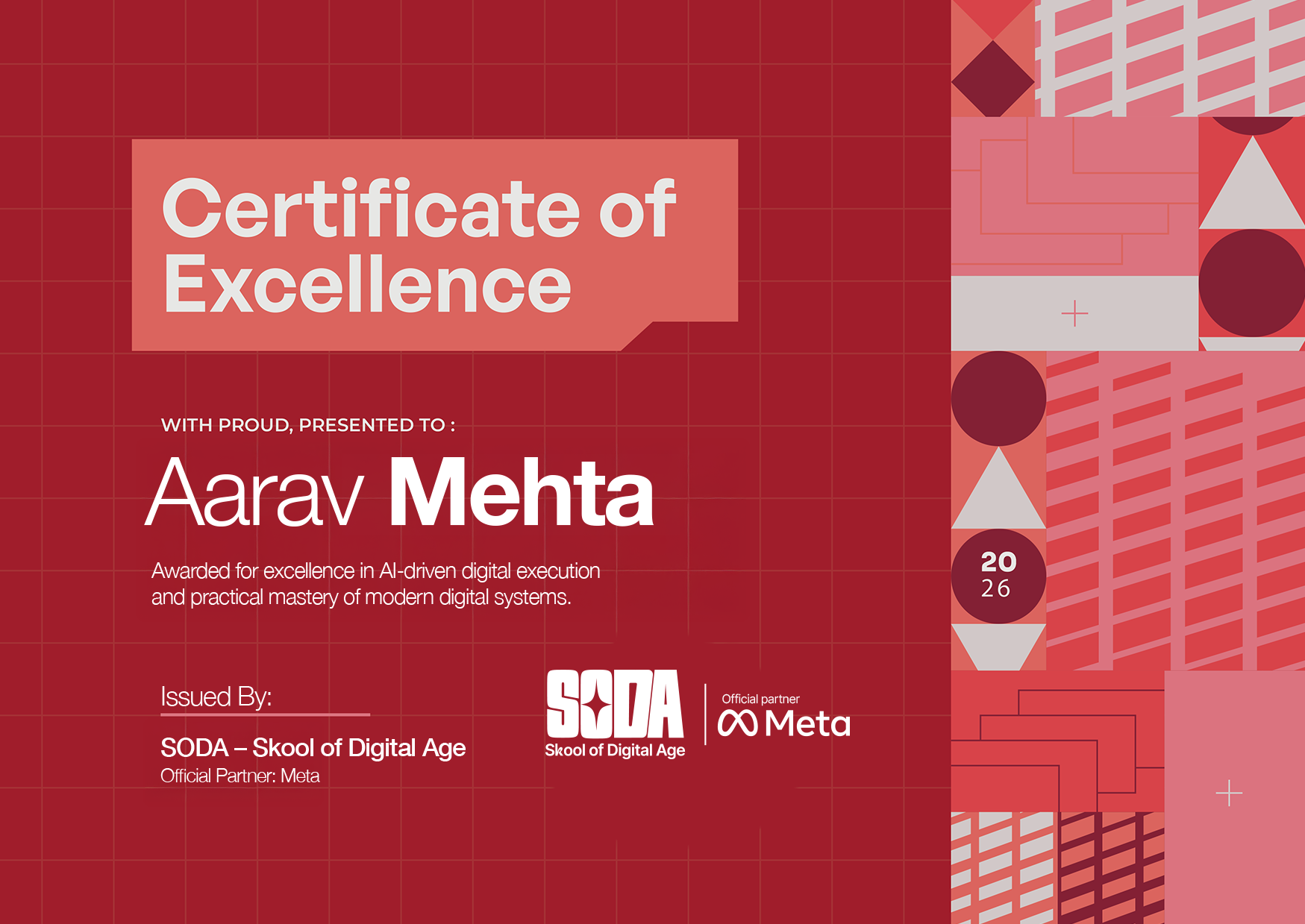
Yes! You will be certified for this program.
The Soda Skool AI Content Creation Program is a 12-week, in-person intensive learning experience based in Mohali. It is designed to help students, creators, and aspiring professionals build real, job-ready and startup-ready skills using AI. The program focuses on hands-on execution, practical thinking, and real-world outcomes rather than theoretical learning.
All classes are conducted offline at the Soda Skool learning space in Mohali. This is a classroom-based program with live interaction, practical sessions, and in-person mentorship. It is not an online or recorded course.
This program is suitable for students seeking careers in content, marketing, or AI-driven roles, creators who want to professionally scale their content using AI, entrepreneurs building brands or startups, and anyone serious about acquiring practical, monetizable skills. No prior experience in AI or content creation is required.
Over 12 weeks, participants will learn how to use AI tools for content ideation, writing, design, editing, and publishing. The program also develops strategic and creative thinking, teaches real content workflows used by brands and startups, and helps participants build a strong portfolio through hands-on projects.
The program is designed to support both career paths. Participants looking for jobs are trained to become skill-ready with strong portfolios and clarity on relevant roles, while entrepreneurs and founders learn how to build content systems, audiences, and growth strategies using AI. The goal is to prepare participants for real-world execution, not just learning.
Soda Skool focuses on making participants genuinely job-ready rather than offering placement guarantees. Guidance is provided on portfolio building, career direction, and role preparation, along with access to mentors and the Soda Skool network. Hiring opportunities may arise based on individual performance and readiness.
A MacBook is provided to selected participants for use during the program, subject to eligibility and program terms. This ensures that all participants work with industry-standard tools and workflows throughout the learning journey.
Classes are conducted through in-person sessions that include live teaching, practical workshops, assignments, mentor discussions, and collaborative projects. Active participation and regular attendance are essential to get the full value of the program.
Since this is an offline program, consistent attendance is strongly encouraged. In case a session is missed, support materials and guidance may be shared, but live classroom participation remains a key part of the learning experience.
Soda Skool focuses on how professionals actually think and work. The program emphasizes execution, clarity, and real outcomes over certificates and theory. Participants don't just learn tools; they learn how to apply them in careers, startups, and real-world projects.